If you've started looking into in-home care for a parent or spouse, the first question is almost always the same: what is this going to cost us? It's a fair question, and a hard one to get a straight answer to. Prices vary by the type of help you need, how many hours, where you live in Missouri, and whether you hire an agency or someone privately.
This guide lays out the real numbers families in Missouri see in 2026, explains what's behind those numbers, and walks through the six most common ways people pay for care — including a few that most families don't realize they qualify for. The goal isn't to sell you on a price. It's to help you plan with your eyes open.
The short answer: what in-home care costs in Missouri
Most non-medical in-home care in Missouri runs somewhere between $26 and $34 an hour in 2026, depending on the agency, the type of care, and your part of the state. National cost-of-care surveys put the Missouri median for homemaker and home health aide services in the high $20s per hour, and Missouri tends to sit a little below the national average — which is good news compared with families in many other states.
To turn that into a monthly picture, here's roughly what different schedules look like at about $28 an hour:
- A few hours, a few days a week (12 hours/week): roughly $1,450 a month. Good for companionship, light help, medication reminders, and a safety check-in.
- Part-time daily help (4 hours/day, 5 days/week — 20 hours/week): roughly $2,400 a month. Covers meals, bathing help, errands, and a real daily routine.
- Most-of-the-day help (35 hours/week): roughly $4,250 a month. This is close to the common planning benchmark used in Missouri cost surveys.
- Full-time, around-the-clock support: this is where costs rise sharply and where many families start blending paid care with family caregiving or looking hard at benefit programs.
These are planning estimates, not quotes. Your actual cost depends on the details below.
What actually drives the price
Two families can get very different quotes for what sounds like "the same" care. Here's why.
The type of care
There's a real difference between companion care (conversation, reminders, light housekeeping, getting to appointments), personal care (hands-on help with bathing, dressing, toileting, transfers), and skilled care (nursing tasks, wound care, therapy). Personal care usually costs a little more per hour than companion care because it requires more training, and skilled nursing is a different category altogether. Most families start with companion or personal care, which is what most in-home agencies in Missouri provide.
The number of hours — and the minimums
Many agencies have a minimum shift length, often around four hours. That's because it's hard to staff a reliable caregiver for a 45-minute visit. If you only think you need an hour, it's worth asking what a four-hour visit could include — often the answer changes how families think about value.
Agency vs. private hire
You can hire a caregiver privately, and on paper it can look cheaper per hour. But when you hire privately, you become the employer: recruiting, background checks, payroll, taxes, scheduling, supervision, and — the big one — backup coverage when your caregiver is sick or quits. With an agency, those responsibilities sit with the agency. The higher hourly rate buys you supervision, a vetted caregiver, and someone who shows up when your regular aide can't. For most families managing care for an aging parent while holding down their own jobs, that reliability is the whole point.
Where you live
Costs in the metro areas around Kansas City and St. Louis can run a bit higher than in smaller Missouri communities. The gap usually isn't dramatic, but it's real.
Six ways Missouri families pay for in-home care
Here's the part most families wish they'd learned sooner. In-home care isn't only paid for out of pocket. There are several programs, and many people qualify for more than one.
1. Missouri Medicaid (MO HealthNet) — In-Home Services and Consumer Directed Services
If your loved one is age 60+ (or an adult with a disability) and meets Missouri's income and care-need rules, MO HealthNet can pay for in-home care through two main paths:
- In-Home Services (IHS): the state authorizes a set number of care hours, and an agency provides a trained caregiver. The state, not the family, manages the worker.
- Consumer Directed Services (CDS): the person receiving care directs their own services and can hire the caregiver of their choice — in many cases including an adult family member or friend, who is then paid for that work.
These two programs are the backbone of affordable home care in Missouri, and the choice between them matters. We've written separate guides comparing them, but the headline is this: if money is a barrier, Medicaid is the first door to knock on, and you don't have to navigate eligibility alone.
2. VA Aid & Attendance for veterans and surviving spouses
This is the benefit most families overlook. If your loved one is a wartime veteran or the surviving spouse of one, the VA Aid & Attendance pension can add a significant monthly, tax-free benefit on top of a basic VA pension — money that can be used to pay for in-home care.
For the benefit year running through late 2026, the maximum Aid & Attendance pension rates reach roughly $2,420/month for a single veteran, about $2,870/month for a married veteran, and about $1,560/month for a surviving spouse — though the actual amount depends on income and unreimbursed medical expenses. For a lot of veteran families, that benefit covers a meaningful share of a part-time care schedule. If there's any chance your loved one served, it's worth checking.
3. Long-term care insurance
If your parent bought a long-term care insurance policy years ago, now is the time to find it and read it. Many policies cover in-home care, not just nursing homes — but they have specific rules about elimination periods (a waiting window before benefits start), daily benefit caps, and what counts as a qualifying need. A good agency can bill the insurer directly or give you the documentation you need to file. Don't assume a policy is useless until someone has actually read the fine print.
4. Private pay — and how to stretch it
Plenty of families pay out of pocket, at least to start. The way to make private pay sustainable is to match the hours to the actual need rather than over-buying. A few well-placed hours — covering the riskiest parts of the day, like mornings and evenings — often does more for safety than a vague "someone should be around." Starting smaller and adjusting is usually smarter than committing to a big schedule on day one.
5. Blending family care with paid care
Most successful care plans aren't all-or-nothing. Families commonly cover evenings and weekends themselves and bring in paid help for weekday hours, or use paid care specifically to get a reliable break (respite) so the family caregiver doesn't burn out. Through Missouri's CDS program, the line between "family care" and "paid care" can even blur in a good way, since a family member may be paid for the caregiving they're already doing.
6. Other community programs
Depending on your county and situation, there may be additional help through Area Agencies on Aging, local senior services, and disability programs. These rarely cover full-time care, but they can fill gaps — a few subsidized hours, meal support, or transportation — that lighten the overall cost.
How to think about all this without getting overwhelmed
When the numbers feel like a lot, it usually helps to work in this order:
First, get clear on what help is actually needed and when. "Twenty-four hour care" and "help with mornings, meals, and bathing" are very different price tags, and many families need the second long before the first.
Second, find out what your loved one qualifies for before assuming you'll pay it all yourself. Between Medicaid, VA benefits, and an old insurance policy, a surprising number of families discover that most of the cost is covered.
Third, start at a sustainable size and adjust. Care needs change, and a good plan can grow with them.
Where ABC LifeCare fits in
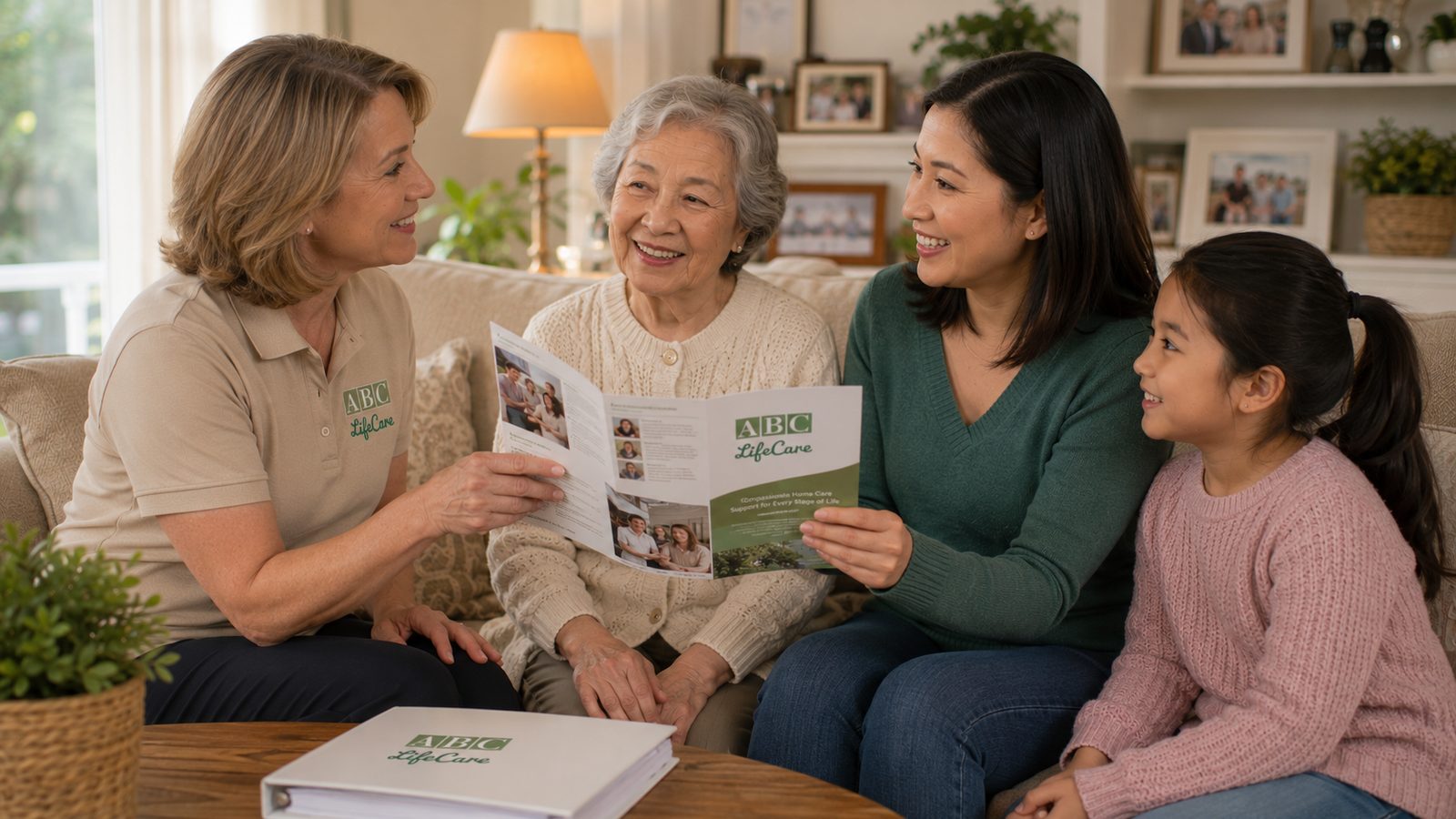
We help Missouri families with exactly this — figuring out what level of care makes sense, what programs you may qualify for, and how to get started without a month of phone calls. We work across Medicaid In-Home Services and Consumer Directed Services, VA benefits, long-term care insurance, and private pay, and we'll tell you honestly which path fits your situation.
If you'd like a real answer for your family rather than a range, reach out through our contact page and we'll walk you through your options.
ABC LifeCare provides in-home care services for families across Missouri. This article is for general education and reflects 2026 cost estimates and program rules, which can change. It is not financial, legal, or medical advice. Benefit eligibility and amounts depend on individual circumstances — please verify current details with the relevant program or with our team.