If you've started looking into help for an aging parent, you've probably run into two phrases that sound almost identical: home care and home health. People use them interchangeably all the time — even some professionals do — but they are two different services, paid for in different ways, doing different jobs.
Getting the difference straight matters. It decides who shows up at the door, what they're allowed to do, how long the help lasts, and who pays for it. Mix them up, and you can spend weeks waiting on the wrong kind of care. This guide breaks it down in plain language so you know exactly what you're asking for.
The one-sentence version
Home health is medical. Home care is everyday, non-medical help.
Home health is short-term, skilled, clinical care ordered by a doctor — a nurse or therapist coming to the house to treat a condition. Home care (also called personal care, in-home care, or non-medical care) is ongoing help with daily life — bathing, dressing, meals, errands, companionship, and staying safe at home.
That's the heart of it. Now let's fill in the details, because the differences shape every decision that follows.
What is home health?
Home health care is medical care delivered at home instead of in a clinic or hospital. It's provided by licensed clinical professionals and is almost always ordered by a physician as part of a treatment plan. Typical home health services include:
- Skilled nursing — wound care, injections, IV therapy, monitoring a serious or changing condition, managing medications after a hospital stay.
- Physical, occupational, and speech therapy — helping someone recover strength, mobility, or function after surgery, a stroke, or an illness.
- Medical social work and limited home health aide visits tied to the skilled care.
The defining features of home health are that it's skilled, doctor-ordered, and short-term. It exists to treat something specific and to help a person recover or stabilize. Once the clinical goal is met — the wound heals, the patient regains strength, the condition stabilizes — home health is designed to end. Visits are usually intermittent: a nurse a few times a week, a therapist a couple of times a week, not someone in the home all day.
What is home care?
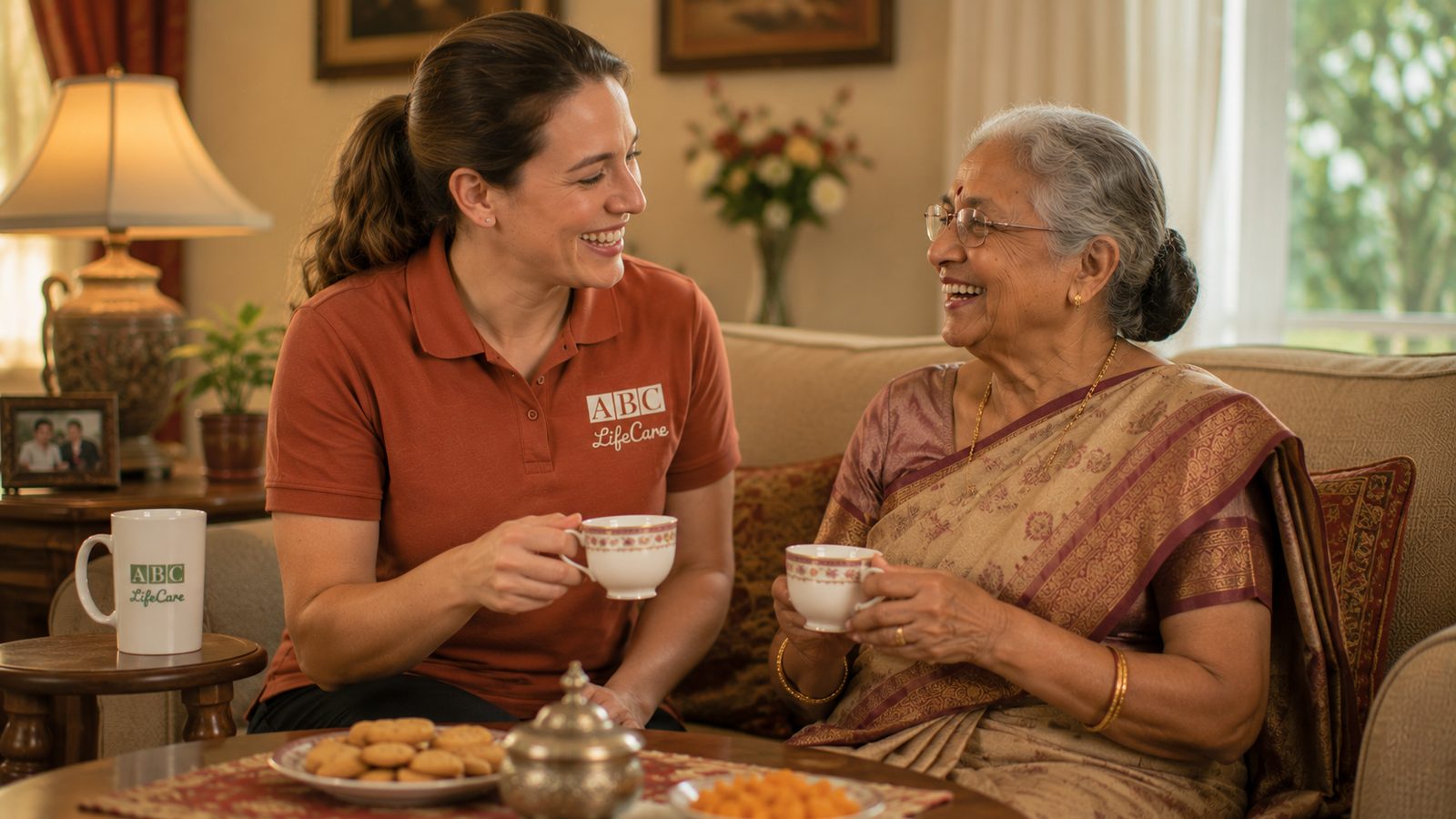
Home care — the kind of service ABC LifeCare provides — is non-medical, everyday support that helps someone live safely and comfortably in their own home. It isn't about treating an illness; it's about helping a person manage daily life when doing it alone has gotten hard or unsafe. Home care usually includes:
- Personal care — help with bathing, dressing, grooming, toileting, and transfers (getting in and out of bed or a chair).
- Companion care — conversation, supervision, reminders, and a reassuring presence.
- Help around the house — meal preparation, light housekeeping, laundry, and shopping.
- Getting out — transportation and help with errands and appointments.
- Medication reminders (cueing — not administering clinical treatments).
The defining features of home care are almost the mirror image of home health: it's non-skilled, it usually doesn't require a doctor's order, and it's ongoing — it can continue for months or years, as long as it's needed. The hours are flexible, from a few a week to around-the-clock, and they're built around the person's daily routine rather than a clinical task list.
Side by side
| Home Health | Home Care | |
|---|---|---|
| Type of help | Medical / skilled | Non-medical / everyday |
| Who provides it | Nurses, therapists | Trained caregivers / aides |
| Ordered by a doctor? | Yes | Usually no |
| Main goal | Treat & recover | Daily safety & quality of life |
| How long | Short-term | Ongoing, as long as needed |
| Schedule | Intermittent visits | Flexible — a few hours to 24/7 |
| Common payer | Medicare, insurance | Medicaid (MO HealthNet), VA, LTC insurance, private pay |
Who pays — and why this trips people up
This is where the two services really part ways.
Home health is commonly covered by Medicare when a person is homebound and needs skilled care on a part-time basis. That's the program built for it. Medicare pays for the nurse, the therapist, and an aide while the skilled need exists.
Home care — the daily, non-medical help — is generally not covered by Medicare. Instead, Missouri families pay for it through MO HealthNet (Medicaid) via In-Home Services and Consumer Directed Services, VA benefits like Aid & Attendance, long-term care insurance, or private pay. (We've written a separate post on why Medicare won't cover ongoing personal care — it's one of the most misunderstood points in all of senior care.)
So when a family says "Medicare will cover Mom's caregiver," they're usually picturing home care but quoting the rules for home health. The two don't match, and that gap is exactly where a lot of confusion — and wasted time — happens.
Where hospice fits
There's a third phrase you'll hear: hospice. Hospice is specialized care focused on comfort, not cure, for someone with a terminal illness, usually with a life expectancy of six months or less. Like home health, it's clinical and intermittent — a hospice team visits to manage pain and symptoms and to support the family. And like home health, it doesn't provide all-day, hands-on custodial help.
That means home care can run alongside hospice too, filling in the daily, hands-on support hospice doesn't cover. (More on that in our dedicated hospice post.)
Can someone get both home health and home care at the same time?
Yes — and many people do. They're not competitors; they're complements.
Picture this common situation: your mother comes home from the hospital after a fall. Home health sends a nurse and a physical therapist for a few weeks to help her heal and rebuild strength — that's the skilled, doctor-ordered piece. But the therapist is only there twice a week for an hour. Who helps her bathe safely on the other days? Who makes sure she eats, takes her medications on time, and doesn't fall reaching for something? That's home care.
The two work beautifully together: home health treats the medical issue, home care keeps daily life safe and steady around it. And when home health ends — because Medicare's skilled benefit is short-term — home care is what continues, so your mother doesn't fall off a cliff the moment the nurse stops coming. (We cover exactly how to pair the two in our post on using ABC LifeCare while on home health.)
How to know which one you need
Ask yourself what the actual need is:
If your loved one needs treatment — wound care, recovery from surgery, therapy after a stroke, management of a new or worsening medical condition — that points to home health, and it starts with a conversation with their doctor.
If your loved one needs help with daily living — getting through mornings safely, bathing, meals, medication reminders, company, not being alone all day — that points to home care, and you can start that directly with an agency like ABC LifeCare without waiting on a referral.
And if the answer is "honestly, both," that's not unusual — and you can have both.
Why this matters for getting help fast
Here's the practical upside of understanding the difference: home care can usually start much faster than people expect. Because it doesn't require a doctor's order or a clinical certification, there's no waiting on referrals and paperwork before someone can begin helping. For a family in a stressful moment, that speed is a relief.
It also means you don't have to wait for a medical crisis to get support. Plenty of families bring in home care simply because daily life has gotten to be too much — no hospital stay required.
How ABC LifeCare fits in
ABC LifeCare provides home care — the everyday, non-medical support that keeps Missouri families' loved ones safe and comfortable at home. We help with personal care, companionship, meals, errands, and the daily routine, and we work across MO HealthNet (Medicaid) In-Home Services and Consumer Directed Services, VA benefits, long-term care insurance, and private pay.
If your loved one is on home health or hospice, we can work right alongside that care, filling the daily gaps those services leave. And because home care doesn't wait on a doctor's order, we can often get started quickly.
Not sure whether you need home care, home health, or both? Reach out through our contact page and we'll help you sort it out and point you the right direction — even if part of the answer is "you need a different service first."
ABC LifeCare provides non-medical in-home care for families across Missouri. This article is for general education and reflects 2026 rules, which can change. It is not medical, legal, or financial advice. Services and eligibility depend on individual circumstances — please contact us for details specific to your situation.