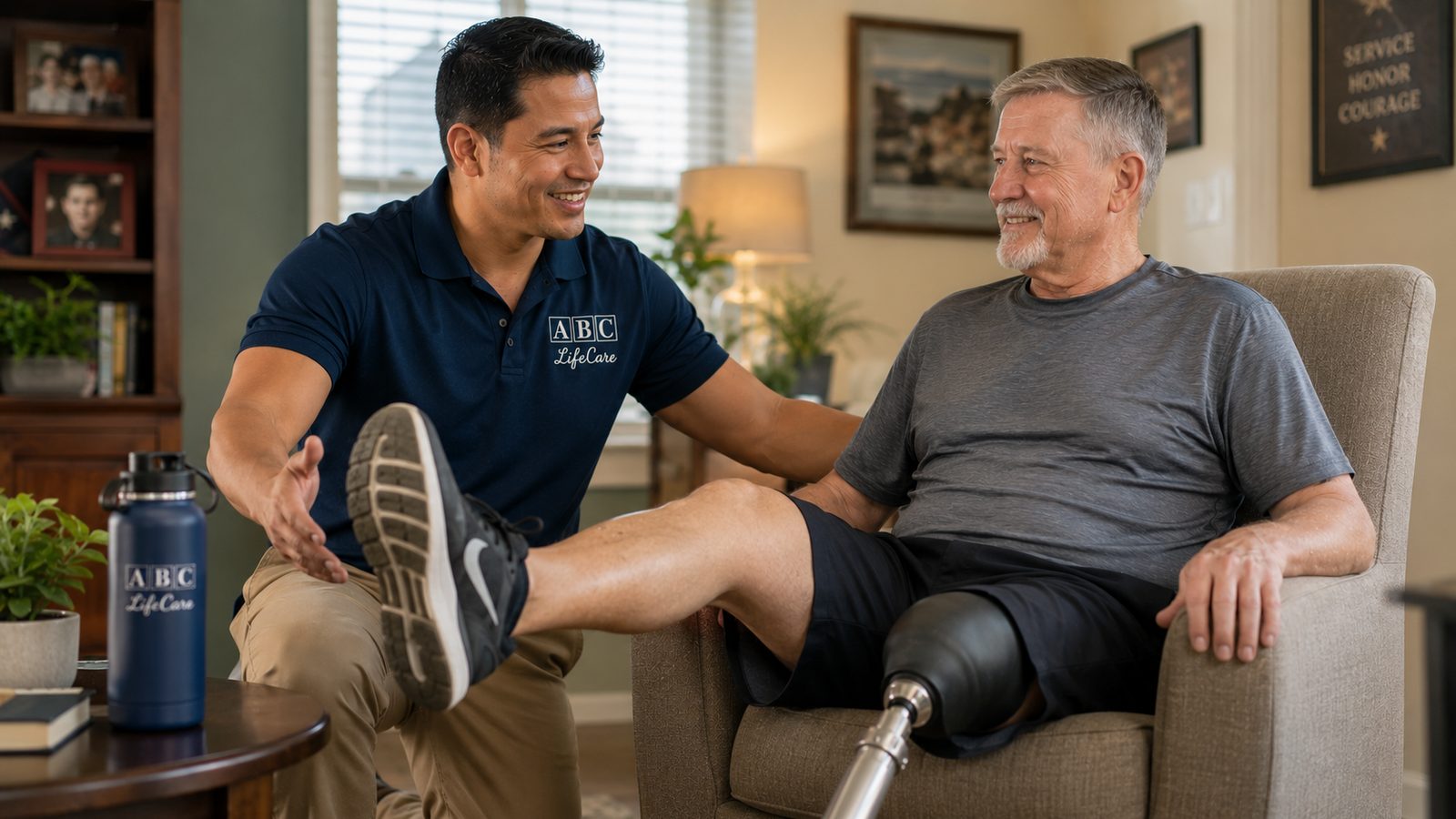
When a loved one comes home from the hospital, the doctor often orders home health — a nurse and maybe a therapist who visit the house to help them recover. That's a good thing. Home health is skilled, medical care, and it does important work.
But here's what families discover fast: the nurse comes for an hour and leaves. The therapist comes twice a week. And in between those visits — which is most of the week — your loved one is on their own with the daily realities of being weak, unsteady, and recovering. Who helps them bathe without falling? Who makes sure they eat and take their medications on time? Who's there at 7 p.m. when they need help getting to bed?
That's the gap home care fills. And the two services together — ABC LifeCare's home care running alongside your loved one's home health — are far stronger than either one alone. Here's how it works and why it matters.
A quick refresher: home health vs. home care
These two sound alike but do different jobs:
Home health is medical care — skilled nursing and therapy, ordered by a doctor, to treat a condition or recover from a hospital stay. It's provided by clinical professionals, and it's short-term and intermittent (a few visits a week). Medicare typically pays for it when a person is homebound and needs skilled care.
Home care (what ABC LifeCare provides) is non-medical, everyday help — bathing, dressing, meals, medication reminders, companionship, errands, and staying safe. It's ongoing and flexible, from a few hours a week to around the clock. In Missouri it's paid through MO HealthNet (Medicaid), VA benefits, long-term care insurance, or private pay.
The key insight: home health is not designed to be there all day. It was never meant to. That's not a flaw — it's just not its job. Filling the hours around it is home care's job.
Yes, you can have both at the same time
Families often assume they have to pick one. You don't. Home health and home care serve different purposes and are paid by different programs, so they run concurrently all the time. Medicare covers the skilled home health visits; Medicaid, VA, insurance, or private pay covers the home care hours. They don't cancel each other out — they cover for each other.
In fact, pairing them is one of the smartest things a family can do during a recovery, for a few specific reasons.
Why the two work so well together
1. Safety between visits
Most falls, missed medications, and setbacks don't happen during a nurse's visit — they happen in the long stretches between them. A home care aide present during those hours means someone is there to steady your loved one on the way to the bathroom, catch a problem early, and handle the daily tasks that recovery makes hard. Home health checks the healing; home care prevents the next crisis.
2. Your loved one actually follows the recovery plan
Home health gives instructions — do these exercises, take these medications, don't lift that, watch for these symptoms. But instructions only help if they're followed. A home care aide reinforces the plan every day: reminding them to do their therapy exercises, making sure medications are taken on schedule, encouraging them to move safely, and preparing the kind of meals the recovery calls for. This is a big part of why people who have daily support tend to recover better and end up back in the hospital less often.
3. The hospital-readmission trap
Here's a sobering reality: a large share of older adults who leave the hospital end up back in the hospital within a month — often for something preventable, like a fall, dehydration, or a medication mix-up. Home health helps, but it's the daily, hands-on presence of home care that catches the small problems before they become readmissions. The combination protects the recovery the hospital and home health worked to achieve.
4. Real relief for the family
Without home care, you become the in-between coverage — taking time off work, sleeping over, managing meals and bathing and medications around your own life. That's exhausting and it isn't sustainable. Home care lets family members go back to being family, while trained caregivers handle the daily load.
The moment that catches families off guard: when home health ends
This is the most important part of this whole article, so don't skip it.
Home health is short-term by design. Once your loved one hits their recovery goals — the wound heals, the strength returns, the condition stabilizes — Medicare's home health benefit ends. The nurse stops coming. The therapist signs off. On paper, your loved one is "better."
But "better" in Medicare's eyes doesn't always mean "able to manage alone." Plenty of people finish home health still needing help with bathing, meals, and getting through the day safely — they just no longer need skilled care. And the day home health ends is the day a lot of families suddenly realize there's no one covering the gap anymore.
If home care is already in place, that cliff disappears. The aide who's been there all along simply continues. There's no scramble, no dangerous gap, no starting from scratch in a panic. The medical care wraps up, and the daily support keeps right on going.
That's why we often tell families: don't wait for home health to end to start home care. Start it alongside, so the transition is seamless.
What this looks like in practice
Say your father has hip surgery. He comes home and home health sends a nurse to check the incision and a physical therapist three times a week. From day one, ABC LifeCare is also there — mornings to help him bathe and dress safely, prepare breakfast and lunch, remind him about medications and his exercises, and keep the house navigable so he doesn't trip.
Six weeks later, the incision's healed and he's walking well. Home health discharges him. But he still tires easily and isn't quite steady on the stairs. No problem — ABC LifeCare is already part of his routine and simply keeps coming, maybe at reduced hours, until he's fully back on his feet. He never has an unsafe day, and you never have a panicked weekend.
How ABC LifeCare coordinates with your home health team
We're used to working alongside home health agencies, and we make it easy:
We fit around the clinical schedule, covering the hours the nurse and therapist aren't there. We reinforce the plan — supporting prescribed exercises, medication schedules, diet, and activity guidance (within our non-medical role). We watch for changes and flag concerns to the family and, where appropriate, the home health team, so small issues get caught early. And we keep going after home health ends, so your loved one's daily support never has a gap.
And because we accept MO HealthNet (Medicaid), VA benefits, long-term care insurance, and private pay, we can usually find a way to cover the home care hours — even for families who were told elsewhere that "Medicaid won't pay for this."
The bottom line
Home health treats the medical problem. Home care handles everything else — the daily safety, the routine, the long hours between skilled visits, and the stretch after home health signs off. Used together, they give your loved one the best shot at a full recovery and give your family room to breathe.
If your loved one is starting home health — or already has it — reach out through our contact page and we'll set up the daily support to go with it, and make sure there's no gap when the skilled care ends.
ABC LifeCare provides non-medical in-home care for families across Missouri and works alongside Medicare-certified home health agencies. This article is for general education and reflects 2026 rules, which can change. It is not medical, legal, or financial advice. Please coordinate any care plan with your loved one's physician and home health team.